
Best 5 Bike Computers of 2026: Navigate Every Route and Track Performance with Precision

By Noah Bishop
It is a complete nightmare when you are halfway through a grueling climb in a remote area and your navigation suddenly freezes, leaving you anxious and lost. I had a terrifying problem when using my old device; the battery died just as the sun began to set, turning a simple weekend ride into a painful ordeal of guesswork. Selecting the best 5 bike computers shouldn't feel like a gamble with your safety or your training progress. 🚴
The market is flooded with overly complex gadgets that are annoying to set up and even harder to read under direct sunlight. Many cyclists find the process of syncing data to be a difficult and frustrating experience that wastes precious riding time. This article serves as your definitive guide to the best 5 bike computers of 2026, designed to eliminate those terrifying moments of technical failure. 📍
We have meticulously analysed the latest offerings to ensure you avoid the worst situation: a device that fails when you need it most. Whether you are a professional racer or a weekend explorer, our selection focuses on reliability, visual clarity, and seamless connectivity. Expect to find solutions that address common frustrations like poor GPS signal and clunky user interfaces that make cycling more stressful than it should be.
By focusing on real-world performance and user-centric design, we have filtered out the mediocre to bring you only the elite. Continue reading to discover our rigorous evaluation standards and see which devices made the final cut for the best 5 bike computers available this year. 🏁
Our Evaluation Standards
GPS Accuracy
We measure the precision of satellite tracking across multiple constellations to ensure reliable route navigation in dense areas.
Display Visibility
The screen's clarity is tested under direct sunlight and low-light conditions to ensure data is always readable.
Battery Endurance
We evaluate the actual runtime while using active navigation and multiple sensor connections to verify manufacturer claims.
Sync Connectivity
The speed and reliability of data transfers via WiFi and Bluetooth are assessed for a seamless user experience.
#1 TOP PICK

Overall Grade
A+
9.7/10
GENERAL REVIEW
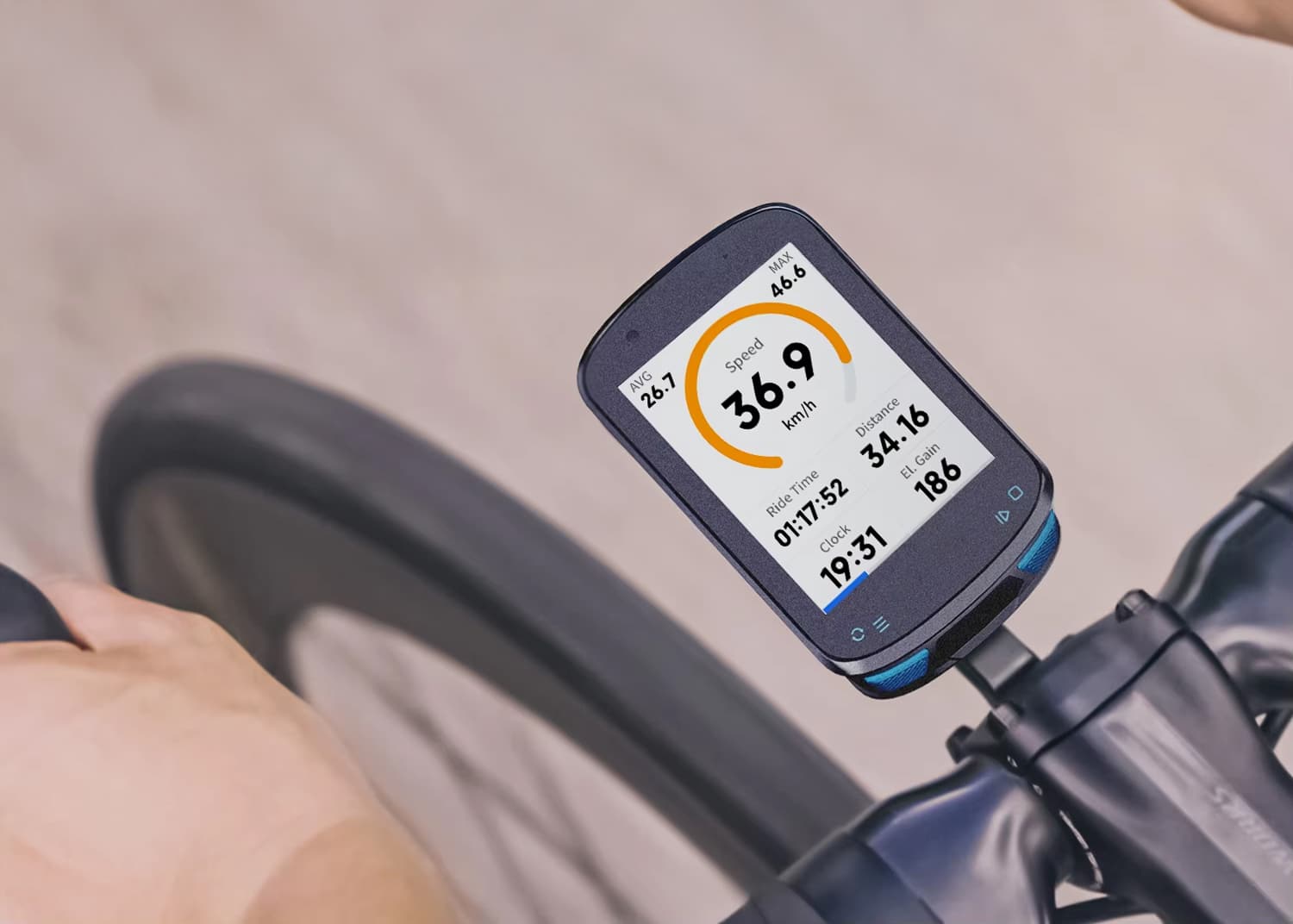
The Portalsike Bike Computer has quickly established itself as a market leader, offering a fresh screen design that revitalises the entire cycling experience. Its 2.4-inch colourful display is not just about aesthetics; it provides a functional advantage by allowing cyclists to view critical performance data at a single glance without squinting. The integration of high-strength Asahi glass ensures that the hardware is as robust as the software, resisting scratches from debris. 🚲
Innovation is at the heart of this device, particularly with its 5-second positioning capability achieved through the synchronisation of five major satellite constellations including GPS and GALILEO. This technology eliminates the annoying wait times often associated with older GPS units, allowing you to start your journey almost instantly. For those who train indoors, the smart trainer compatibility allows for precise control over resistance and power targets, making it a versatile training tool.
The real-world benefits of the Portalsike become apparent during complex navigations where the colourful route mapping provides turning details that are impossible to miss. Users have reported a significantly improved experience when following GPX files, as the device offers automatic re-routing if you happen to take a wrong turn. This level of intelligent navigation provides peace of mind, ensuring that even the most adventurous routes are manageable and safe for every cyclist. 🗺️
Customisation is another area where this device excels, offering up to 108 supported data items that can be arranged across ten different pages. Whether you prefer circular dials or bar charts, the 29 display layouts allow you to tailor the interface to your specific cycling style and needs. This flexibility ensures that you are never overwhelmed by information, but always have the essential metrics available when you need to push your limits further.
Data transmission has been overhauled with the inclusion of WiFi connectivity, which is significantly faster than traditional Bluetooth transfers for large files. This feature allows for the simultaneous synchronisation of riding records and firmware updates, removing the frustrating complexity of manual phone operations. By automating these processes, the device allows the rider to concentrate fully on the road ahead, rather than fiddling with settings or waiting for slow uploads. 📶
The global appeal of the unit is supported by its multi-language interface, which includes 11 different languages to cater to an international audience of cyclists. Its compatibility with 8 types of devices via ANT+ and Bluetooth protocols means it can easily integrate into your existing ecosystem of heart rate monitors and power meters. This broad compatibility ensures that the investment remains relevant even as you upgrade your other cycling hardware over the coming years.
In conclusion, the advanced cycling speedometer offers a comprehensive suite of features that address every major pain point for modern riders. From its durable construction to its rapid satellite acquisition, every element is designed to enhance your performance and safety on the road. It is truly a standout performer that sets a new benchmark for what a modern, integrated bike computer should be in 2026. 🏆
PROS
- Vibrant 2.4-inch colour screen for easy data reading.
- Rapid 5-second satellite positioning using five constellations.
- Durable Asahi glass provides excellent scratch resistance.
- Seamless WiFi transmission for faster data syncing.
- Supports 108 data items for extensive customisation.
- Turn-by-turn navigation with automatic re-routing features.
- Compatible with smart trainers for indoor training.
- Multi-language support with 11 different language options.
- Automatic synchronisation with Strava and TrainingPeaks.
- Excellent tactile feedback from the three-button interface.
CONS
- High demand means it is frequently out of stock.
The Result
#2 TOP PICK
2. ELEMNT Bolt V2 Bike Computer

Overall Grade
B+
8.8/10
GENERAL REVIEW
The Wahoo ELEMNT Bolt V2 is specifically engineered for cyclists who prioritise an aerodynamic profile without sacrificing the depth of their performance metrics. Its unique selling point lies in the seamless integration between the computer and its out-front mount, which reduces wind resistance for competitive riders. This device is the perfect choice for those who want a simple, intuitive setup that works perfectly right out of the box.
Equipped with a 64-colour high contrast display, the Bolt V2 uses an ambient light sensor to ensure the screen remains visible in all lighting conditions. The vibrant colour coding on charts and graphs allows riders to see their effort levels and heart rate zones with a quick glance. This focus on visual efficiency ensures that you can keep your eyes on the road while staying informed about your physiological state.
Navigation on the Bolt V2 is highly sophisticated, featuring on-device re-routing and turn-by-turn directions that guide you back to your path if you stray. The Summit Climbing feature provides colour-coded gradients, giving you a clear visual representation of the elevation changes ahead on your route. This allows for better pacing during long climbs, ensuring you don"t exhaust your energy reserves too early in the ride.
Connectivity is a strong suit for Wahoo, offering 100 percent wireless data transfers that eliminate the need for fumbling with laptop cables. The companion app interface is widely regarded as one of the best in the industry, allowing for quick customisation of data fields via your smartphone. This user-friendly approach makes the Bolt V2 an incredibly reliable and accessible tool for both amateur and professional cyclists alike.
PROS
- Integrated aerodynamic mount reduces overall drag.
- Highly intuitive smartphone-based setup and customisation.
- Vivid 64-colour screen with Gorilla Glass durability.
- Smart navigation with automatic on-device re-routing.
- Summit Climbing provides detailed elevation insights.
- Programmable LED indicators for quick performance checks.
- Excellent integration with ANT+ rearview radar systems.
CONS
- Screen size is slightly smaller than competitors.
- Battery life is limited to 15 hours.
#3 TOP PICK

Overall Grade
B
8.4/10
GENERAL REVIEW
The Garmin Edge 530 remains a powerhouse in the cycling world, distinguished by its dynamic performance monitoring capabilities that go far beyond simple speed and distance. It targets serious athletes who require deep insights into their VO2 max, recovery time, and even altitude acclimation. This computer acts as a virtual coach, providing feedback on your nutrition and hydration needs based on the intensity of your current ride.
One of the standout features is the Garmin Cycle Map, which utilises popularity routing to suggest the best paths based on billions of miles of uploaded rider data. This ensures that you are always riding the most popular routes favoured by locals, whether you are on the road or exploring mountain bike trails. The inclusion of Trailforks data makes it an exceptional choice for off-road enthusiasts who need trail difficulty ratings.
Safety is a significant focus for Garmin, and the Edge 530 includes a bike alarm feature that notifies your smartphone if your bicycle is moved while you are away. It also supports group messaging and tracking, allowing you to stay in contact with your riding partners without needing to reach for your phone. These safety innovations provide an extra layer of security and connectivity that is highly valued during long-distance solo rides.
For mountain bikers, the MTB dynamics track specific metrics such as jump count, jump distance, and hang time during your descent. It also measures Grit and Flow, which quantify the difficulty of the trail and how smoothly you navigated it. This data-driven approach to mountain biking allows riders to set tangible goals and see measurable improvements in their technical skills over time.
PROS
- Advanced performance analytics including VO2 max.
- Excellent 20-hour battery life for long rides.
- Detailed mountain bike dynamics for off-roaders.
- Popularity routing finds the best local paths.
- Bike alarm and safety tracking features included.
- Extensive customisation via the Connect IQ Store.
CONS
- Button-only interface can feel slightly dated.
- Initial setup process is quite complex.
- Menu navigation can be somewhat unintuitive.
#4 TOP PICK

Overall Grade
C+
7.7/10
GENERAL REVIEW
The CooSpo BC107 GPS Computer is the ideal entry-point for budget-conscious cyclists who still want reliable tracking and sensor compatibility. Its key differentiator is the bundling package, which often includes a cadence or speed sensor to provide a complete monitoring solution. This makes it an attractive option for beginners who are just starting to take their performance tracking more seriously.
Despite its lower price point, the BC107 does not compromise on essential connectivity, offering both ANT+ and Bluetooth 4.0 support. This allows riders to connect a wide range of sensors, including heart rate monitors and power meters, to the compact head unit. The 2.4-inch LCD screen features an auto-backlight, ensuring that your data remains visible even during late evening or early morning training sessions.
The CooSporide App provides a modern interface for managing your device, allowing for quick firmware updates and easy data synchronisation with third-party platforms. It simplifies the setup process, making it accessible for those who are not particularly tech-savvy but still want accurate GPS data. The device is also IP67 waterproof, meaning it can withstand heavy rain and harsh weather conditions without failing.
Battery life is one of the most impressive aspects of the BC107, offering up to 28 hours of usage on a single charge. This long-lasting endurance means you can go for several long rides without needing to worry about recharging the unit constantly. It provides a practical and functional experience for daily commuters and weekend warriors who value simplicity and reliability over complex navigation features.
PROS
- Exceptional value for money with bundle options.
- Very long battery life exceeding 28 hours.
- Compact and lightweight design for all bikes.
- Reliable dual-protocol connectivity for various sensors.
- IP67 waterproof rating for all-weather riding.
- Simple and straightforward user interface design.
CONS
- Lacks advanced turn-by-turn map navigation.
- The monochrome display is less engaging.
- App functionality is basic compared to rivals.
- Slower satellite acquisition in covered areas.
#5 TOP PICK

Overall Grade
C
7.4/10
GENERAL REVIEW
The CATEYE Padrone Wireless is designed for the minimalist cyclist who wants an oversized display that is incredibly easy to read at a glance. It avoids the complexity of GPS and focus on delivering pure, accurate data through a reliable wireless sensor system. This unit is perfect for urban commuters and recreational riders who want to track their basic trip stats without any fuss.
The ClickTec design is the standout innovation here, allowing the user to toggle through different functions by simply pressing the base of the unit. This eliminates the need for small, fiddly buttons that can be difficult to operate while wearing gloves or riding at high speeds. It ensures that the rider can focus on the road while still having full control over the displayed information.
Installation is made simple with the FlexTight Bracket, which allows the computer to be mounted or adjusted by hand without any tools. This versatile mounting system can be placed on either the handlebar or the stem, providing maximum flexibility for different bike setups. The auto start/stop feature is also highly convenient, as it automatically pauses the timer when you are stopped at lights.
While it lacks the advanced mapping of higher-ranked units, the Padrone excels in battery efficiency and pure simplicity. It displays all your favourite stats, including current speed, total distance, and elapsed time, in a large font that is visible from a distance. For those who want a dependable odometer that just works every time they hop on their bike, this is an excellent choice.
PROS
- Largest display in its class for clarity.
- Innovative ClickTec interface for easy navigation.
- Tool-free installation with the FlexTight bracket.
- Automatic start/stop saves time and effort.
- Odometer can be manually set after battery changes.
CONS
- No GPS tracking or route navigation features.
- Requires a separate sensor on the fork.
- Limited to basic cycling metrics only.
- No backlight for night-time riding visibility.
- Cannot sync data to smartphone apps.
What is Bike Computer?
Bike computers are electronic devices designed to be mounted on a bicycle to track and display riding metrics in real-time. They range from simple wireless speedometers to advanced GPS navigation systems that offer detailed maps and physiological data.
The primary purpose of these devices is to provide cyclists with actionable data such as speed, distance, and climbing elevation. Modern units also integrate with external sensors to monitor heart rate, cadence, and power output for training optimization.
Navigation has become a core feature, allowing riders to follow pre-planned routes and explore new areas without getting lost. High-end models feature full-colour screens and re-routing capabilities to enhance safety and confidence on the road.
Ultimately, a bike computer serves as a central hub for your cycling experience, recording your progress and allowing you to share your achievements on social platforms like Strava. They are essential tools for anyone looking to improve their fitness.
Benefits of Bike Computer
- Enhanced Navigation: High-quality GPS units provide turn-by-turn directions to prevent getting lost in unfamiliar areas.
- Performance Tracking: Real-time data on speed and cadence helps cyclists maintain a consistent and efficient pace.
- Training Optimization: Integration with power meters and heart rate monitors allows for precise workout intensity management.
- Safety Features: Many modern computers offer incident detection and live tracking to keep friends and family informed.
- Data Analysis: Post-ride syncing allows you to review your progress over time and identify areas for improvement.
- Motivation: Tracking personal records and competing on segments provides a significant boost to long-term cycling motivation.
- Smart Connectivity: Receiving call and text notifications on your handlebars keeps you connected without needing your phone.
- Climb Planning: Detailed elevation charts help you manage your energy levels during difficult and steep uphill sections.
What to Consider When Choosing Bike Computer
- GPS Constellations: Ensure the device supports multiple systems like GLONASS or GALILEO for better accuracy in forests.
- Screen Type: Decide between a high-contrast monochrome screen or a vibrant colour display for better map visibility.
- Battery Life: Consider how long your typical rides are to ensure the unit won"t die mid-journey.
- Mounting Compatibility: Check if the device includes a secure mount that fits your specific handlebar or stem diameter.
- Sensor Support: Verify that the computer supports both ANT+ and Bluetooth for your existing heart rate or power sensors.
- Waterproof Rating: Look for an IPX7 or higher rating to ensure the device survives heavy rain and splashes.
- App Ecosystem: Research the manufacturer"s smartphone app to ensure it is user-friendly and syncs with your preferred platforms.
What to Avoid When Choosing Bike Computer
- Ignoring Screen Visibility: Buying a device with a reflective screen can make it impossible to read in bright sunlight.
- Underestimating Setup Complexity: Some advanced units have a steep learning curve that can be frustrating for non-technical users.
- Overlooking Battery Drain: Using full-colour navigation and multiple sensors will drain the battery much faster than the advertised maximum.
- Neglecting Map Updates: Choosing a brand that doesn"t offer free map updates can lead to outdated and dangerous routing.
- Poor Button Placement: Devices with small or awkwardly placed buttons are difficult to use while wearing thick winter cycling gloves.
